

Bulb numbers that actually show
How many to order, how deep they go and when, which ones come back, and how to put them on a planting plan, with the sums worked out.
Bulbs are where planting plans most often go thin. A hundred tulips sounds like plenty on paper. Spread across a large border, it turns into a few lonely flowers poking out of bare soil in April. Compared with almost everything else on a schedule, bulbs are cheap, so it pays to be generous and to show your working.
How many: start from spacing
Suppliers usually give a planting distance, and a distance is easy to turn into a number per square metre. Divide 10,000 by the spacing in centimetres, squared. At 10cm apart that is 100 bulbs per m², at 15cm it is about 45, and at 30cm about 11.
Typical spacings for a full, solid show:
- Tulips: 10 to 15cm apart, so roughly 45 to 100 per m².
- Standard daffodils: 10 to 15cm, roughly 45 to 100 per m².
- Crocus, Muscari and dwarf daffodils: 5 to 10cm, roughly 100 to 400 per m².
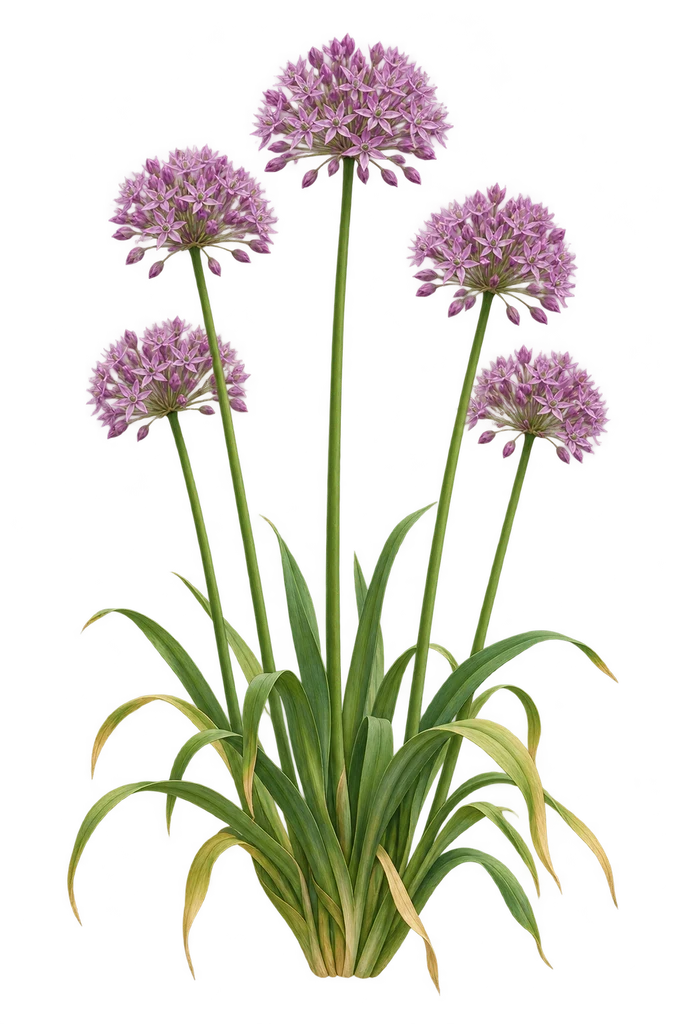
- Medium alliums such as 'Purple Sensation': 15 to 20cm, roughly 25 to 45 per m².
- Large alliums such as 'Globemaster': 25 to 30cm, roughly 11 to 16 per m².
Those numbers are for a block of one kind. Bulbs threaded through perennials need far fewer, because the perennials fill the ground and the bulbs only have to punctuate it. A third to a half of the solid figure, worked out across the whole border, is a sensible starting point. Check each supplier's own advice too, particularly for the big alliums, whose heads vary a lot in size.
How deep
The usual rule is to plant bulbs in a hole two to three times as deep as the bulb is tall. Tulips are the exception worth knowing: planting them deeper, at around 15 to 20cm, helps them come back the following year and keeps them steadier in wind.
When
- Daffodils, crocus and most small bulbs: as early as you can get them, in September and October, because they start rooting early.
- Alliums and camassias: September to October.
- Tulips: late October and November. Colder soil reduces the risk of tulip fire, a fungal disease, which is why the old advice to wait until November has stuck around.
Which come back
Daffodils are the dependable ones. Most return for years, and smaller ones such as 'Thalia', 'Jetfire' and 'Tête-à-tête' naturalise readily. Alliums such as 'Purple Sensation' come back and seed themselves gently around. Camassia bulks up steadily and is one of the few bulbs that is genuinely happy in heavy, moist soil.
Tulips are the complicated one. Plenty of hybrid tulips flower beautifully once and then dwindle, so treat them as a seasonal cost unless you choose types with a better record. Darwin hybrids, many viridiflora tulips such as 'Spring Green', the lily-flowered 'Ballerina' and species tulips such as and tend to persist. Say on the schedule which you are specifying, so the client knows whether they are paying for one spring or for years.
Design your next garden with Twigged
Start with free plant research and manual garden planning. Compare plans for AI allowances and Pro client presentation exports and sharing.
Get started